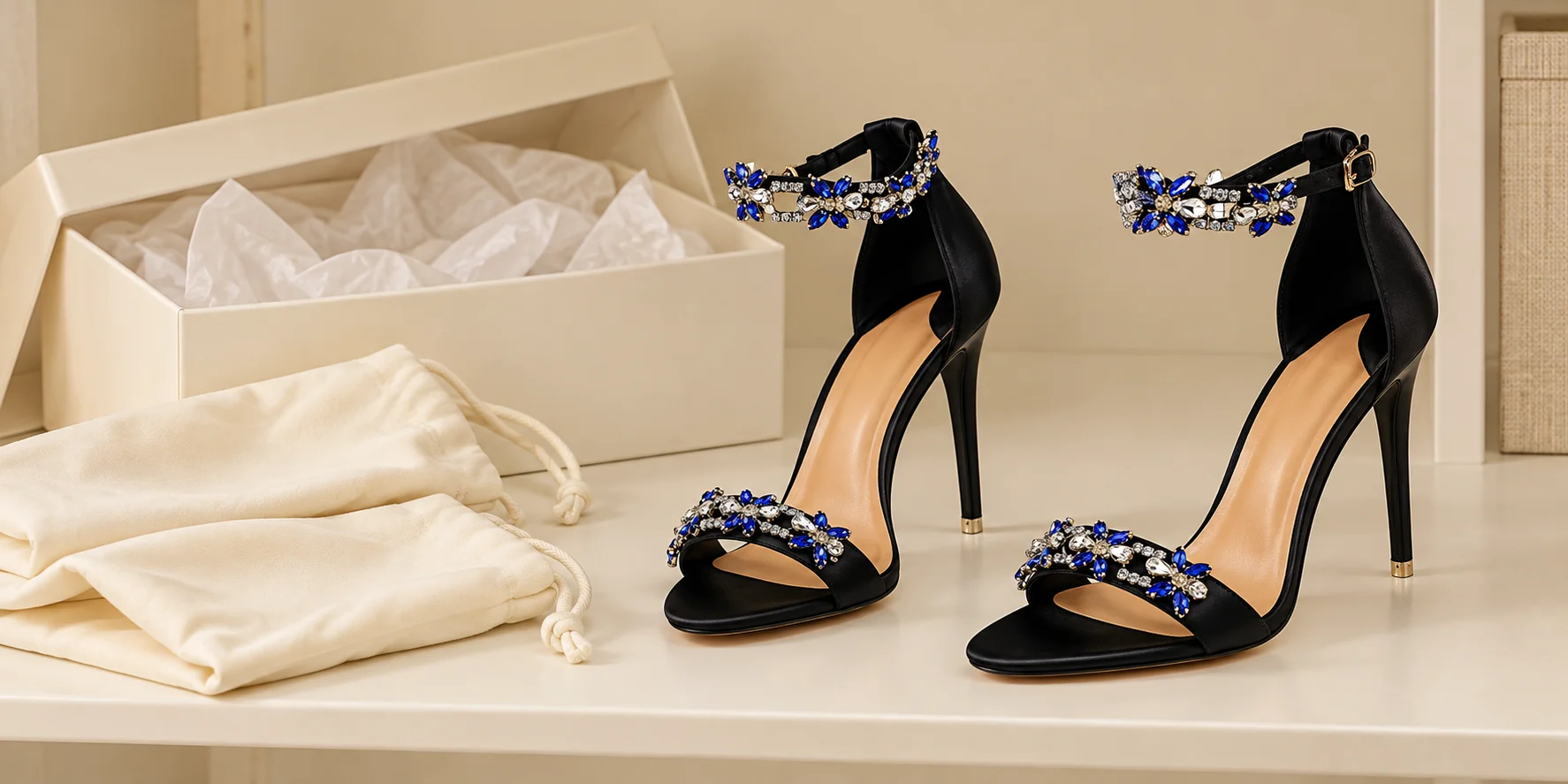
Yes, you can wear tights with open-toe heels. Start by deciding whether you want fabric over your toes or bare toes, then check the hosiery’s toe finish against the sandal’s front strap. Color comes next; a smooth fit and a combination you can walk in matter more than an old styling rule.
“Tights with sandals” covers several different looks. Sheer black hosiery under fine straps, opaque tights with a matching sandal, and toeless hosiery with exposed toes do not create the same effect. The most useful choice happens at the front of the shoe, where a seam, reinforced panel or open edge may be visible.
Choose the Toe Finish Before the Color
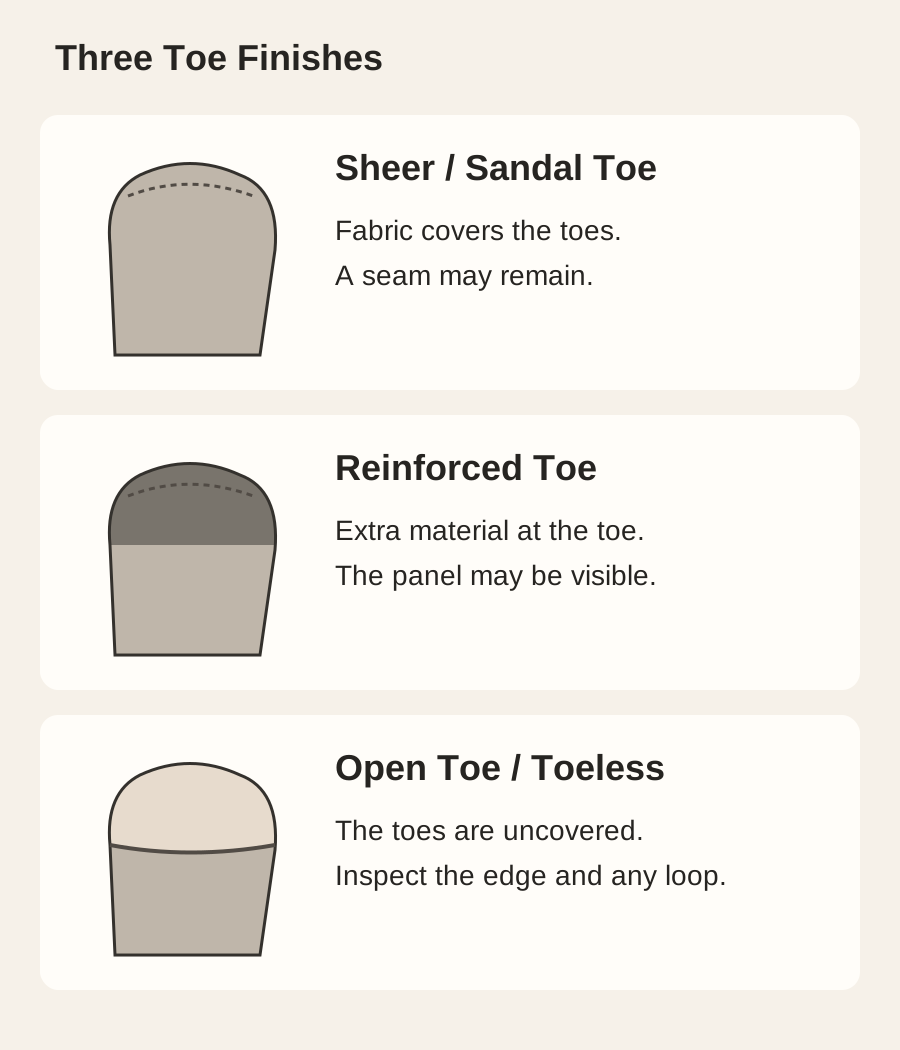
Read the hosiery description and examine a close-up of its foot section. The word “sandal” on the packet does not necessarily mean your toes will be uncovered, and “sheer” does not promise a seam-free toe.
- Sandal-toe or sheer-toe tights: These cover the toes with a relatively discreet finish. There may still be a seam. Check where it sits when you put the shoes on.
- Reinforced-toe tights: These have extra reinforcement at the toe. A denser-looking area may show through the opening; decide whether you like that visible detail.
- Toeless or open-toe tights: These leave the toes uncovered. Check the position of the opening and any loop against the front strap.
The Tight Spot’s hosiery glossary distinguishes these toe finishes and notes that sandal-toe styles usually still have a seam. Treat the names as a starting point, then inspect the particular pair.
For a concrete construction example, Wolford’s Luxury 9 Toeless Tights use a knitted-in toe loop and leave the front of the foot uncovered. That confirms how that style is made; other open-toe hosiery may use a different finish. Do not assume a loop will sit neatly beneath every sandal.
Match the Opening to the Sandal’s Front Strap
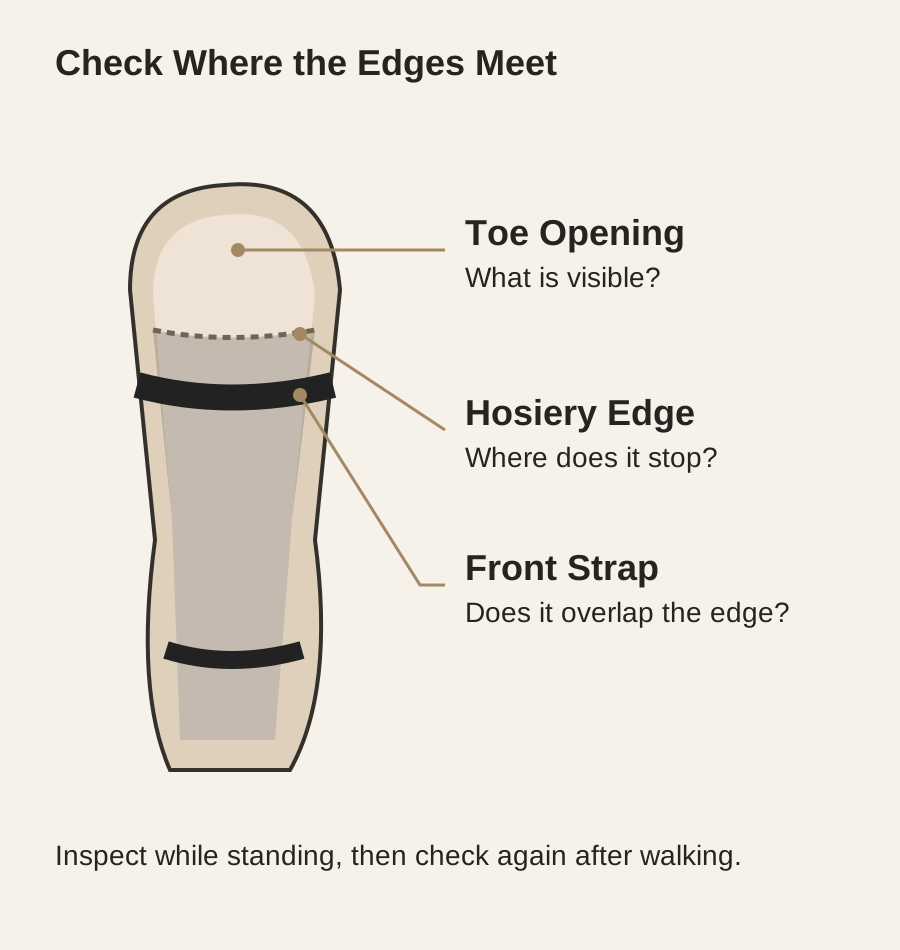
Place the shoes and tights together before planning the rest of the outfit. A narrow strap near the toes exposes a different area from a broad band across the forefoot. Several crossing straps can leave small windows where the hosiery’s edge is especially noticeable.
With full-foot tights, look for the toe seam and any change in fabric density. With toeless tights, look for the line where the fabric stops. The goal is not to hide every construction detail at all costs: it is to decide whether the visible finish looks intentional to you without twisting the hosiery or pulling it out of place.
The Slim-Strap Stiletto Sandals have slim toe and ankle straps and include a Black option. Their exposed front makes the toe finish worth checking closely. This is a design example, not a promise that a particular pair of tights will fit them.
Do not buy a larger shoe automatically to accommodate tights. Compare the exact shoe’s measurements with your feet, follow the hosiery’s own size chart, and try the combination. Our foot-measuring guide explains the shoe-chart step; it does not replace a hosiery size guide.
Build One Clear Color Combination
Once the toe detail works, choose how much contrast you want. These are starting combinations to try, not rules about which bodies or ages can wear the look.
- A quiet, tonal look: Black tights, black sandals and a charcoal or black skirt. Fine straps may blend into the tights; compare the textures in normal room light.
- A lighter outfit with a dark base: An ivory dress or ivory tailored top with a dark skirt, black hosiery and black sandals. Keep the bag simple while you decide whether you like the light-and-dark contrast.
- A visible shoe accent: Dark tights with a colored sandal and otherwise restrained clothes. The shoe’s outline becomes more noticeable, so check the front opening as carefully as the ankle.
Sheer hosiery shows more of the skin beneath; opaque hosiery creates a more solid field of color. Neither is automatically right or wrong with a fine heel. If opaque black makes the shoe disappear more than you want, try a different opacity or a contrasting shoe rather than adding accessories immediately.
Who What Wear’s sandals-and-tights feature shows the pairing with different tones and textures. Use such examples as outfit inspiration, not as proof that every combination will fit or suit your plans.
Check the Pairing in Motion
Try both shoes with the actual hosiery on a clean indoor surface, following the seller’s return conditions. Stand, take a few normal steps and turn. Then look again at the toes and straps.
- Check the fabric. Is it lying smoothly, or gathering under a strap? Reposition it normally rather than stretching it hard to conceal a seam.
- Check the shoe. Does your foot keep moving forward, or does a rear strap slip? Do not assume the fit you liked with bare feet will feel identical with hosiery.
- Check the fastenings. Keep the hosiery clear of buckle hardware while fastening the sandal. Stop if a rough edge catches the fabric.
- Check your movement. If the pairing pinches or makes you feel unsteady, change the hosiery or shoes. A photo-friendly combination is not enough.
If you are still choosing a shoe construction, our ankle-strap, slingback and mule comparison explains the different rear fastenings. No one category guarantees that hosiery will stay smooth or that the shoe will stay in place.
Dress for the Plans, Not Just the Mirror
For an indoor dinner or party, try the complete outfit with the coat and bag you intend to carry. For a wedding or another event, check the stated dress code rather than assuming that tights make an open-toe shoe more formal.
Tights do not turn an open sandal into weatherproof footwear. Consider the journey, rain, cold and walking surfaces separately from the indoor look. If the route calls for different shoes, plan the change rather than forcing one pair to do everything.
The simplest decision sequence is: toe coverage, visible edge or seam, strap placement, color, then a try-on in motion. Once those choices work together, our dress-and-pants styling guide can help you finish the outfit.