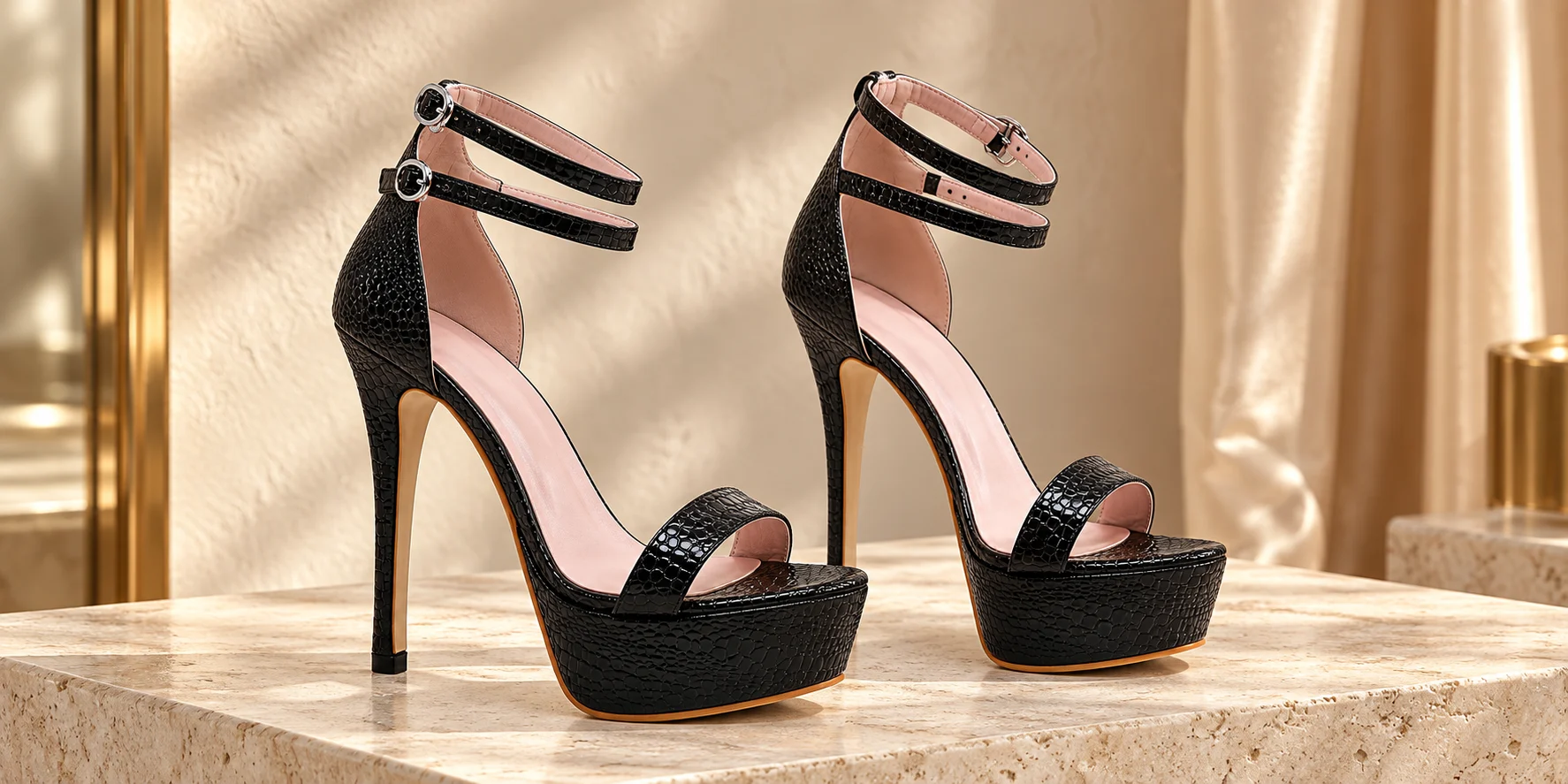
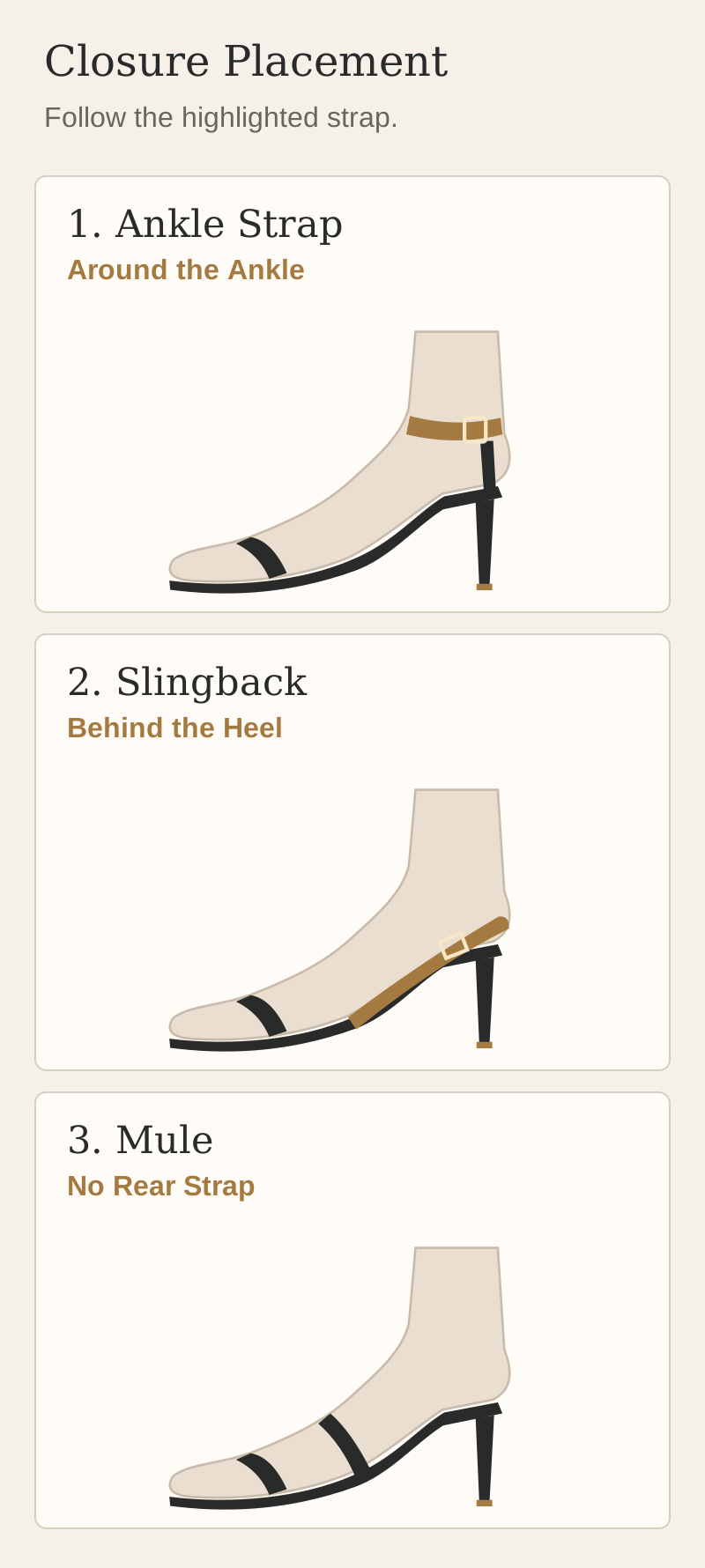
Choose an ankle-strap sandal if you want a fastening that circles the ankle, a slingback if you want a strap behind the heel, or a mule if you prefer an open back with no rear fastening. Then check how the actual shoe fits and moves on your foot. The category name is only the first filter.
These three designs can share an open toe, thin front straps and a stiletto heel, so a front-view picture may make them look surprisingly similar. The useful differences appear at the sides and back: where the straps sit, whether you can adjust them and what you need to do to put the shoes on.
The Difference Is at the Back
- Ankle-strap sandals: A strap goes around the ankle. The fastening may be a buckle, clasp or another closure, and the shoe may also have a panel behind the heel.
- Slingbacks: A strap passes behind the heel and joins the sides of the shoe. It does not make the same complete band around the ankle.
- Mules: The heel is open, with no strap fastening behind it. You slide your foot beneath the front straps or upper.
Cole Haan’s dress-shoe guide makes the same central distinction between slingbacks and mules: one has a rear strap; the other has a backless construction. Heel shape is a separate decision. A stiletto can appear on any of these three designs.
In this guide, mules means the open-toe, backless heeled styles in the Syncreas collection. Closed-toe mules exist too. A slingback can also have either an open or closed toe, so check the whole product rather than assuming the name describes its front.
Choose an Ankle Strap for an Around-the-Ankle Fastening
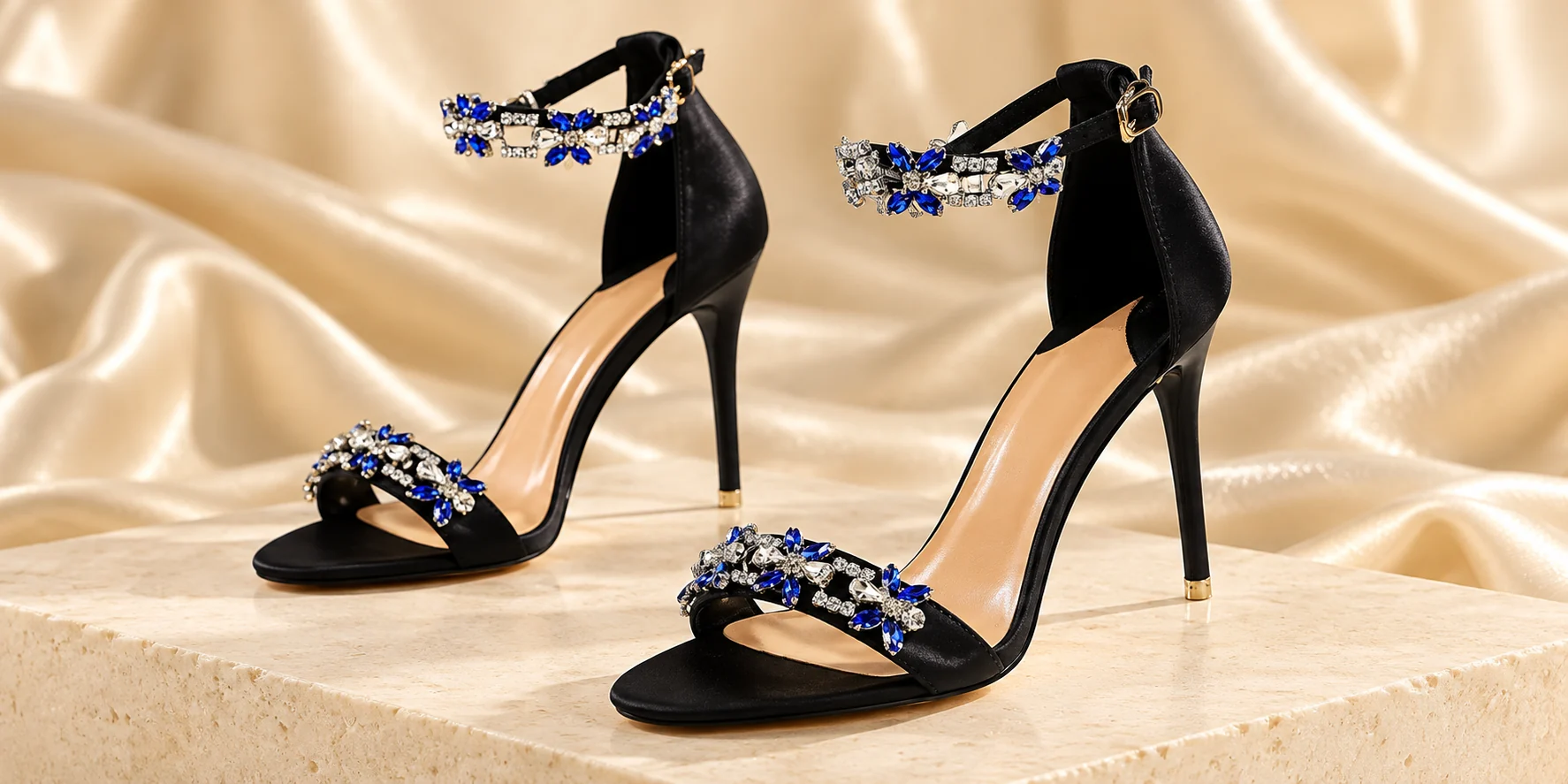
Start here if you like having a closure around your ankle and are happy to fasten it when you get dressed. Look at the strap’s position and the fastening close-up. A buckle with holes offers a different adjustment system from a clasp, and a decorative metal detail does not automatically mean the strap is adjustable.
The Syncreas Rhinestone Ankle-Strap Stiletto Sandals are one specific example: the product details list an open toe and a buckle-fastened ankle strap. Their rhinestone decoration is a separate choice from the closure itself.
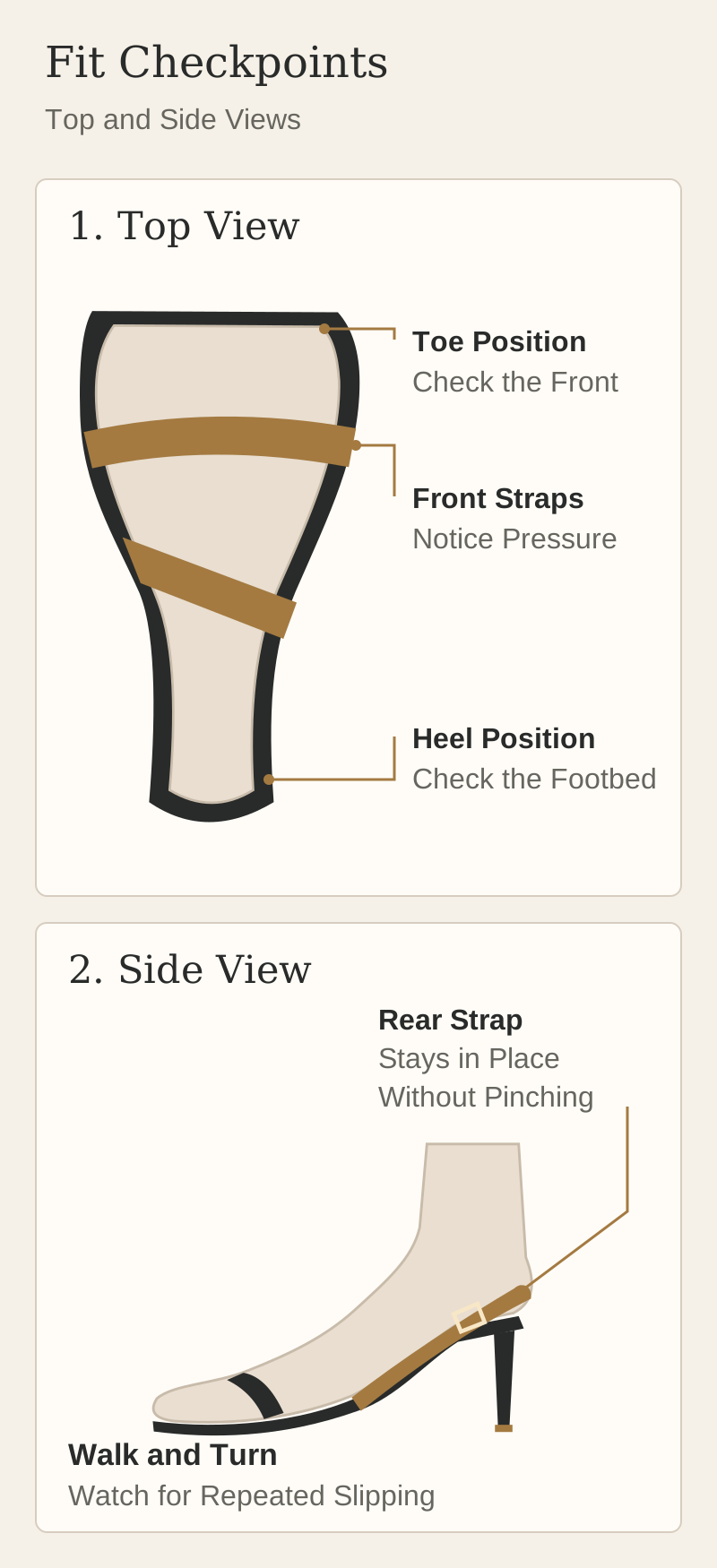
During a try-on, fasten each shoe normally and take a few steps. Notice whether the strap stays in its intended position, whether the buckle presses against your ankle and whether the front of the shoe fits at the same time. Tightening the ankle strap is not a substitute for checking the rest of the sandal.
Check before buying: Can you see how the closure opens? Does the product description confirm adjustment? Can you comfortably reach and operate the fastening? If those details are missing, ask before choosing on the basis of a front-view image.
Choose a Slingback for a Rear Strap and an Open Heel
A slingback is worth considering when you want a strap behind the heel without a complete ankle band. Compare the rear strap in both side and back views. Some designs use an adjustable buckle; others rely on elastic or a fixed shape. Those details matter more than the word “slingback” alone.
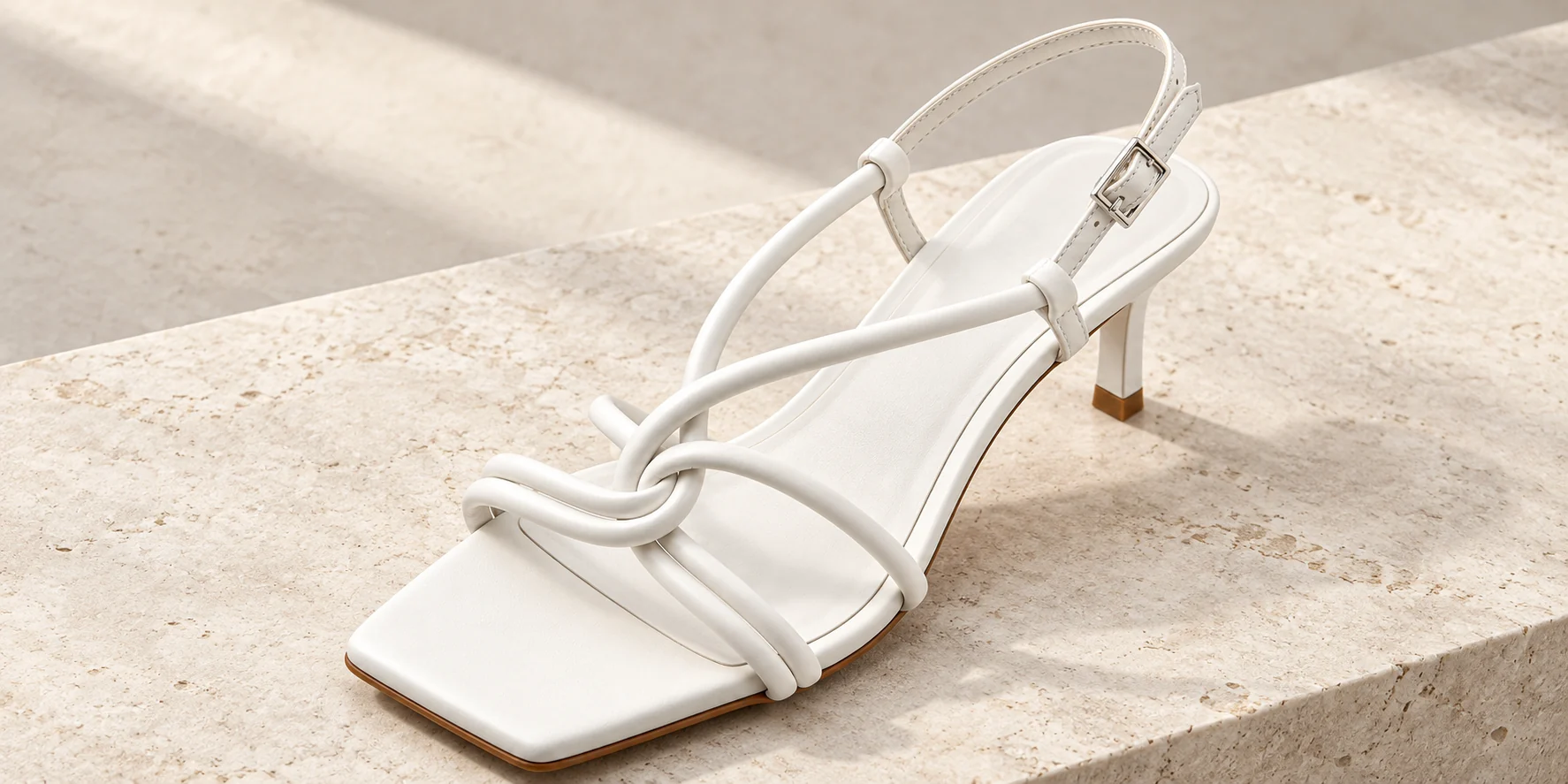
The Syncreas Interloop Slingback Stiletto Sandals have an adjustable buckled slingback strap, interlinked tubular front straps and an open square toe, according to their product details. That confirms the adjustment feature for this model; it should not be assumed for every slingback.
Pay particular attention to whether the strap stays behind your heel as you walk. CHARLES & KEITH’s slingback guide advises against both a strap that slips off with slight movement and one that pinches at the back. If an available adjustment cannot resolve either problem, keep comparing sizes or designs rather than treating repeated readjustment as part of wearing the shoe.
Check before buying: Is the rear strap adjustable, elasticated or fixed? Is that confirmed in the details? During a try-on, does it remain in place when you take a normal step and turn?
Choose Mules for a Slip-On, Backless Design
Mules remove the rear fastening entirely. Choose this construction if slipping into the shoe is an important preference and you like leaving the heel open. Your attention shifts to the front and midfoot straps: where they cross, how much of the foot they cover and how the whole shoe follows your movement.
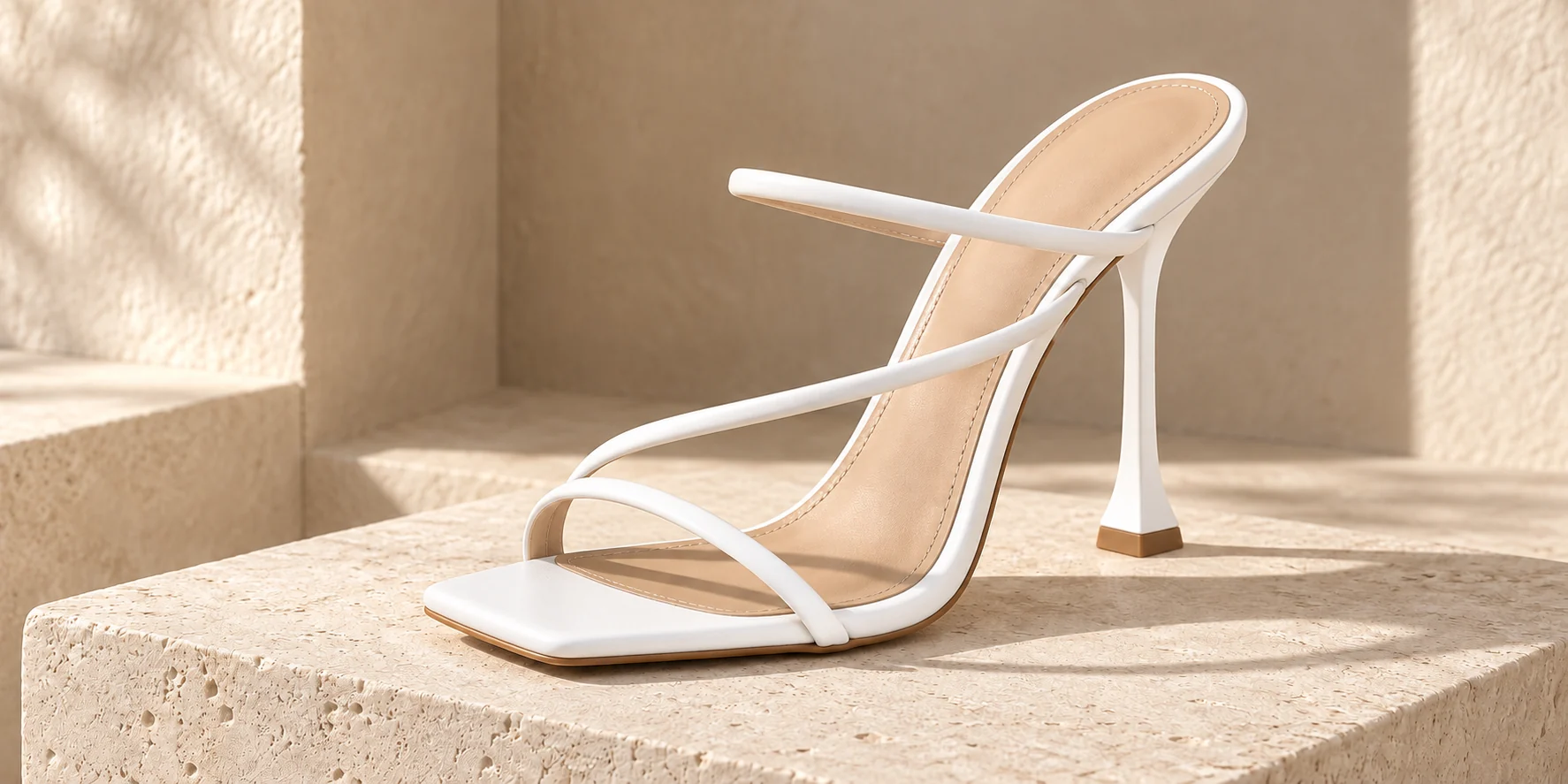
The Syncreas Asymmetric-Strap Stiletto Mules are described as slip-on and open-backed, with thin asymmetric straps and a squared open toe. The upper straps create a different fit arrangement from a broad, single-band mule, even though both share the same backless category.
Try both shoes and walk at your usual pace on a clean indoor surface. Notice whether your foot keeps moving forward, whether the straps leave pressure points and whether you have to change your step to keep the shoe with you. A quick slip-on entry is useful only if you are also happy with the fit while moving.
Check before buying: Study the top view as well as the side profile. Identify every strap that crosses the foot and confirm whether any can be adjusted. Do not assume an open back will compensate for front straps that feel too tight.
Compare the Whole Shoe Before You Decide
If you are choosing between two pairs, separate their closure differences from everything else. A high stiletto mule and a lower slingback differ in more than the rear strap. For a clearer comparison, look for similar heel heights and front-strap coverage where possible, then note the remaining differences.
- Read the exact product’s size guide. Syncreas’s supplier size labels should not be assumed to be US sizes. Use the measurements on the page for that model. Our foot-measuring guide explains how to record length and width before comparing a chart.
- Read the closure description. Look for explicit wording such as “adjustable buckled strap” or “slip-on.” A photo alone may not reveal the mechanism.
- Review the side, top and back views. Check the toe opening, front-strap placement, rear construction and heel together.
- Try both shoes in motion. Standing still, walking and turning can reveal different fit issues. Stop if the shoes pinch or make you feel unsteady.
- Keep your plans in mind. Consider walking time and the surfaces you expect to cross. None of these closure names guarantees comfort or suitability for a particular outing.
Read the returns policy before ordering and follow its try-on conditions. Once you have chosen the construction, our strappy-heels styling guide covers a different decision: pairing the shoes with dresses and pants.
Quick Questions About Sandal Closures
Are Slingbacks and Ankle-Strap Sandals the Same?
No. A typical ankle strap circles the ankle; a slingback strap crosses behind the heel and joins the sides. Check the pictures because retailer naming can overlap.
Do All Slingbacks Have Adjustable Straps?
No. Read the individual product description. A buckle, elastic section and fixed strap offer different ways of putting on and fitting the shoe.
Are Mules Always Closed-Toe?
No. The Syncreas Asymmetric-Strap Stiletto Mules have an open toe and an open back. Elsewhere you will also find closed-toe mules. The lack of a rear strap is the relevant distinction here.
Which Type Should I Try First?
Start with the fastening you want to use: around the ankle, behind the heel or none at the back. Then let the individual fit decide. If the first pair pinches, slips repeatedly or needs constant attention, compare another design rather than relying on its category label.